GAF Energy
GAF Energy
GAF Energy

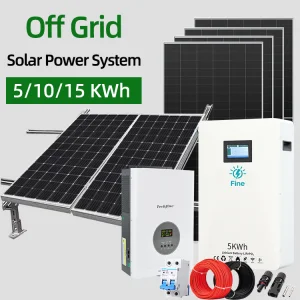
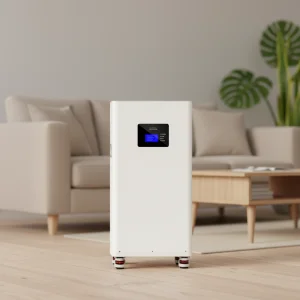
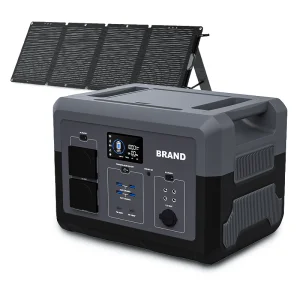
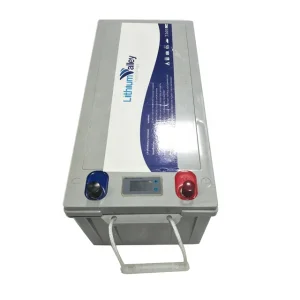


Shenzhen GAF Energy Co., Ltd. is an industry-leading, high-technology manufacturer and exporter specializing in Lithium Battery Packs, Intelligent Battery Monitoring Systems (BMS), and Integrated Energy Storage Solutions. Headquartered in China's Silicon Valley—Shenzhen—we stand at the frontier of the global renewable transition, developing, manufacturing, and deploying reliable Lithium Iron Phosphate (LiFePO4) storage systems across commercial, residential, industrial, and telecommunication sectors globally.
Our core competence lies in the integration of premium prismatic and solid-state cells with sophisticated hardware and firmware architecture. By utilizing intelligent, cloud-compatible Battery Management Systems (BMS), GAF Energy products guarantee superior safety thresholds, prolonged cycle lives, microsecond-level fault response times, and exceptional thermal control parameters. Our capabilities span standard industrial battery formats to fully customized, high-voltage battery designs built to demanding OEM and ODM specifications.
Primary Strategic Advantage:
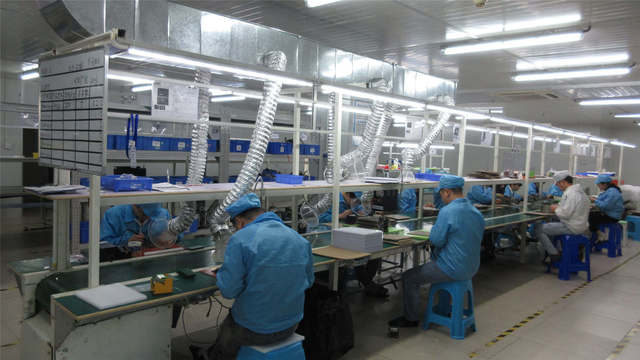
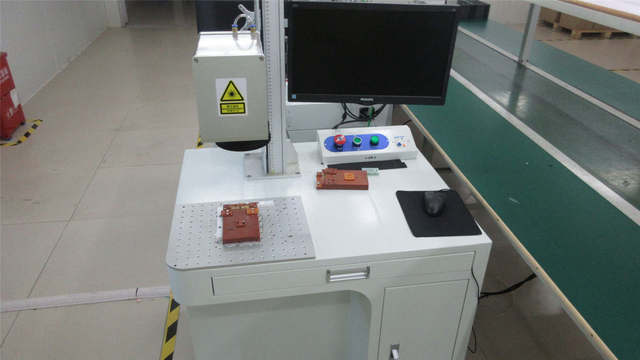
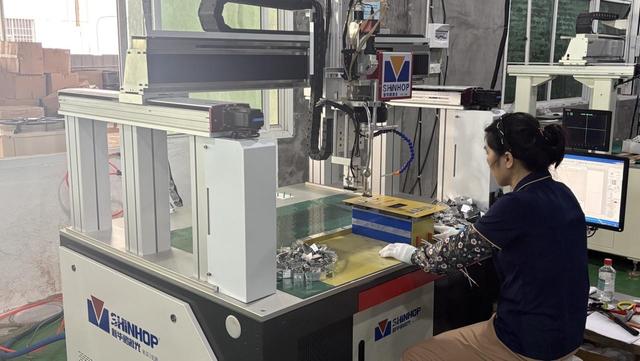
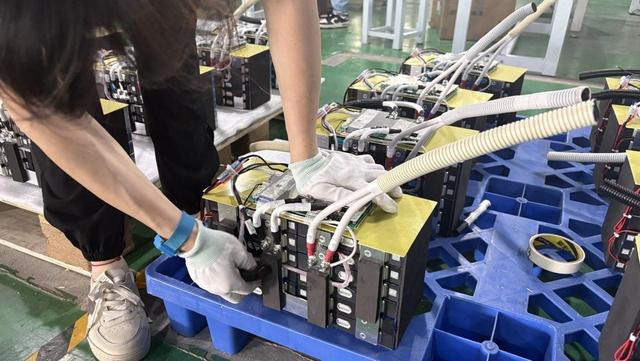
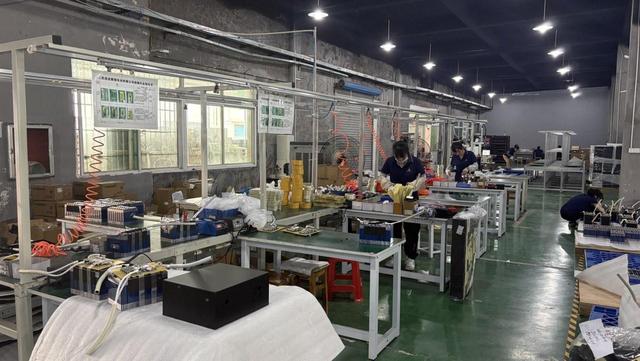
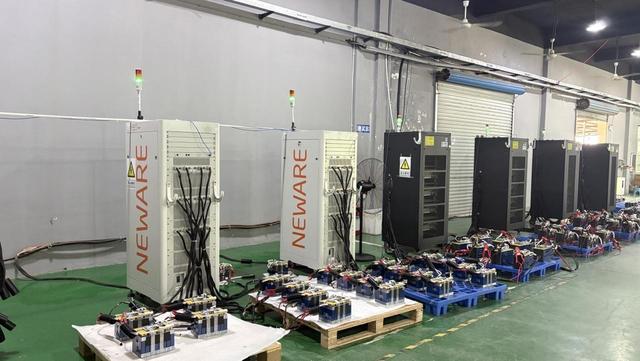
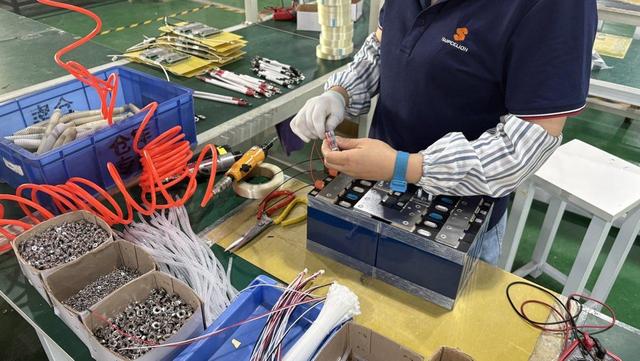
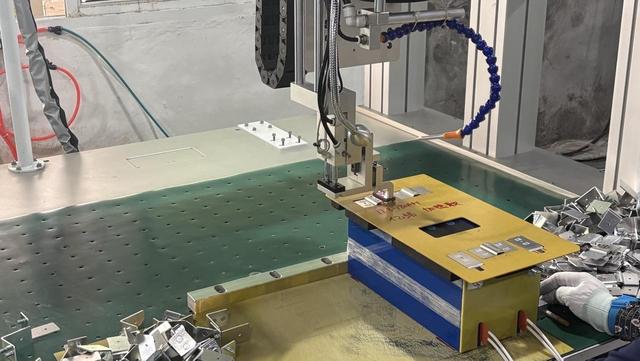
Unlike standard tier-2 battery assemblers, GAF Energy operates fully automated cell sorting lines, surface-mount technology (SMT) setups for proprietary BMS engineering, and specialized environment-controlled cycle chambers. This ensures that every battery monitoring system and power block we export complies with international quality raters, including UL 1973, UL 9540A, CE, UN38.3, and IEC 62619 standards.
The global transition toward high-density lithium storage has elevated the Battery Monitoring System (BMS) from a secondary protection accessory to the ultimate guardian of system reliability, safety, and investment return. In utility-scale solar farms, enterprise data centers, and heavy-duty industrial vehicle fleets, battery cells undergo rigorous high-current cycles. Without micro-second level cell monitoring, the risks of local overcharging, voltage drift, rapid capacity degradation, and catastrophic thermal runaways escalate exponentially.
Currently, international safety mandates (such as Europe’s CE battery regulations and the Americas’ NFPA 855 codes for stationary energy storage systems) demand continuous monitoring of cell-level parameters, including voltage, current, temperature, and internal impedance. The modern commercial landscape demands smart systems that offer high-precision State of Charge (SOC) and State of Health (SOH) telemetry. As a key manufacturing exporter in Shenzhen, GAF Energy produces state-of-the-art BMS infrastructure to support global supply chains in scaling up green energy deployment.
Continuous cell-level monitoring prevents localized thermal events by isolating problematic modules before temperature anomalies propagate.
Intelligent cell balancing algorithms ensure that all series-connected cells reach their peak capacity synchronously, eliminating early capacity cut-off.
By protecting batteries from excessive deep discharges and high-temperature stress cycles, advanced BMS extends operational lifespan to 10-15 years.
BMS architectures are transitioning from centralized, passive resistor-based architectures to decentralized, active-balancing configurations integrated with AI-powered cloud diagnostics. As a primary BMS exporter, GAF Energy invests heavily in research and development to implement these advanced technical roadmaps across our product categories.
Standard passive balancing systems dissipate excess energy from high-voltage cells through shunt resistors as waste heat. While cost-effective, this method generates unwanted thermal load. GAF Energy's high-capacity commercial energy systems implement Active Balancing. By utilizing capacitive or inductive energy transfer circuits, the active balancer transfers energy from high-potential cells to weaker cells dynamically. This minimizes thermal buildup and recovers up to 98% of the drifted capacity, delivering optimal battery pack performance.
Estimating battery energy metrics requires advanced mathematics. Our hardware integrates Extended Kalman Filtering (EKF) algorithms with Coulomb counting to monitor LiFePO4 cells. This approach corrects drift caused by temperature variances, aging curves, and chemical relaxation phases, maintaining SOC estimation accuracy within <1.5%.
The future of battery monitoring extends beyond local microcontrollers. GAF Energy’s IoT-enabled BMS architectures leverage edge computing to capture high-frequency current, voltage, and temperature metrics. These are transmitted via secure protocols (CAN bus, Modbus, RS485) to cloud-based diagnostic platforms.
In the cloud, machine learning models analyze historical parameters to predict potential cell faults up to 48 hours before occurrence. This technology transforms reactive battery maintenance into predictive reliability management.
Selecting the appropriate BMS architecture requires balancing application scope, scalability requirements, and financial targets. Below is a comparative analysis of the three primary BMS configurations utilized across the industrial spectrum:
| Topological Parameter | Centralized BMS Architecture | Distributed Modular BMS | Daisy-Chain Active-Balancing BMS |
|---|---|---|---|
| Ideal Applications | Low-voltage setups, e.g., EV 2/3 Wheelers, Golf Carts | High-voltage C&I ESS, Server Racks, Solar Grids | Heavy-Duty Electric Forklifts, Mining Utility Vehicles |
| System Scalability | Low (Fixed physical wire harnesses) | High (Add modular slave boards) | Very High (Expandable up to 240 cells in series) |
| Noise Immunity (EMI) | Moderate (Long parallel wiring loops) | Excellent (Short local connections) | Superior (Isolated differential bus communication) |
| Maintenance Cost | Low initial cost, high diagnostic replacement cost | Modular replacement, minimal downtime | Lowest lifetime cost due to automated balancing |
Different operating environments present unique challenges to battery chemistry. Designing robust monitoring networks requires tailoring systems to the specific stresses of each application:
Industrial sites experience highly dynamic peak-shaving cycles. GAF Energy's high-voltage rack-mounted systems feature multi-tier master-slave BMS controllers that coordinate several battery stacks. They provide real-time state estimates, protect against over-current events, and optimize heat dissipation to ensure stable grid operation.
Industrial warehouse machinery and outdoor golf carts face constant mechanical vibrations and steep, high-current discharge cycles. GAF Energy's integrated BMS utilizes heavy-duty copper busbars, shock-resistant housing, and instant short-circuit protection to ensure safe, reliable operations.
Off-grid installations and marine environments are subject to high humidity and salt corrosion. Our systems feature conformal-coated PCBs, IP67-rated enclosures, and low self-discharge monitoring logic to protect battery arrays from deep discharge during seasonal dormancy.
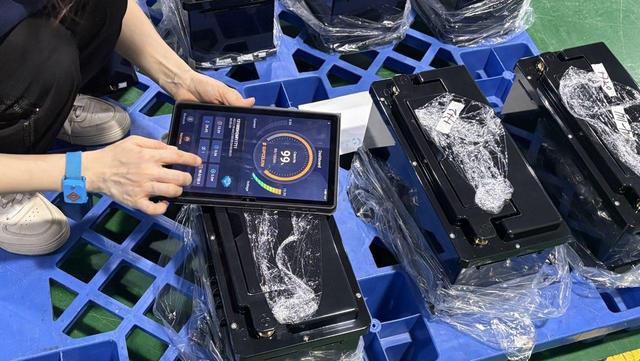
Every product exported by GAF Energy is designed and validated to meet the demanding requirements of global energy applications. By combining premium battery cells, intelligent battery management systems (BMS), and rigorous testing procedures, we deliver exceptional safety, long cycle life, stable performance, and high energy efficiency.
GAF Energy provides comprehensive OEM and ODM services for distributors, energy solution providers, solar installers, system integrators, and private-label brands. From product design and engineering to manufacturing and technical support, we deliver flexible solutions tailored to specific project requirements. Serving customers across North America, Europe, Australia, Southeast Asia, Africa, and the Middle East, Shenzhen GAF Energy Co., Ltd. has established long-term partnerships based on product reliability, competitive pricing, and responsive customer service.

Explore direct technical answers to common questions about battery monitoring systems, industrial LiFePO4 batteries, and GAF Energy’s custom manufacturing capabilities.